Evaluating the Striped Bow USA 1776 Embroidery Design
As a designer who spends a lot of time translating digital files into actual stitchwork, I approach every new embroidery design with a specific question: will this hold up in a real project? Today, I’m thinking through the Striped Bow USA 1776 PNG, SVG design from that exact practical perspective. Let’s consider how it would perform not just on a screen, but on fabric.
A Design That Suggests Celebration and Craft
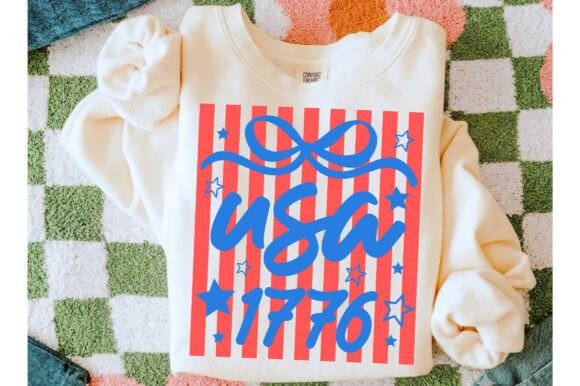
First impression matters. The Striped Bow USA 1776 design immediately communicates a festive, patriotic, and handmade-friendly mood. The central motif—a bow adorned with stripes and the prominent 1776—has a classic, almost gift-wrapped feel. The layout is straightforward and bold, which is a huge advantage for embroidery. It doesn’t try to be overly intricate where stitches might blur, but it has enough personality to stand out as a custom piece. This isn’t a subtle watermark; it’s a statement element. I can already picture it on the chest of a soft sweatshirt or centered on a sturdy tote bag.
Where This Design Finds Its Natural Home
Based on its visual personality, the Striped Bow USA 1776 embroidery file belongs to a family of projects that celebrate heritage, craft, and personalization. It feels perfect for boutique merchandise, craft fair standout items, or personalized gifts meant to mark an occasion.
- Custom Apparel: It would be a strong, clean focal point on a t-shirt or sweatshirt, especially for a small business focusing on Americana or holiday-themed lines.
- Home and Gift Items: Imagine it embroidered on a kitchen towel for a summer BBQ gift, or on a pillow cover for a rustic decor line. The design’s theme lends itself well to giftability.
- Baby and Nursery: On a baby blanket or a little cap, scaled appropriately, it could become a cherished heirloom item with a handmade touch.
- Craft Business Assets: For an Etsy seller, this design could be the star of a simple embroidered patch or an apron, creating a cohesive look for a product collection.
The fact that it comes in multiple file formats like SVG and PNG is a practical boon. It allows for flexibility—using the PNG for quick printable mockups to preview a product listing, and the vector formats for clean scaling to different hoop sizes in the actual embroidery work.
The Real-Life Embroidery Scenario: A Custom Tote Bag
Let’s walk through a real case. I’m considering using the Striped Bow USA 1776 design for a custom embroidered tote bag intended as a holiday market product. My immediate thoughts turn to execution. The bold shapes and numbers are good—they suggest clean satin stitch borders and fill stitch areas that shouldn’t become overly dense. However, the small stripes within the bow and the finer details of the “1776” numeral require attention.
On a textured fabric like canvas for a tote, I’d need a good stabilizer to ensure those details don’t get lost. I’d absolutely test this on scrap fabric first, checking the thread color contrast. Using a bright red and white on a dark navy bag could look stunning, but I’d need to verify the stitch clarity, especially on the curved surface where the bag might dip. This design, with its clear elements, should build customer trust in the handmade presentation; it looks professional and intentional.
Caution Zones: Where to Pay Extra Attention
Every design has areas that demand a careful approach. For the Striped Bow USA 1776, I’d be mindful in a few key situations.
- Small Hoop Sizes & Tiny Details: If you’re trying to miniaturize this for a cap or a baby item, the smaller stripes and the intricacies of the numbers need inspection. A running stitch might not hold the detail well here; satin stitch may be required.
- Stretchy or Thin Fabrics: On a t-shirt or a lightweight polo, the stitch density needs to be appropriate to prevent puckering. The design’s boldness is an asset, but the execution must be adapted to the fabric.
- Dark Fabric Backgrounds: This is a color-critical design. The visual appeal hinges on contrast. Testing it in black and white mockups helps, but a physical test with your chosen thread on the dark fabric is irreplaceable.
- Products for Frequent Use: For an apron or a kitchen towel that will be washed often, the stitch integrity of the smaller elements is crucial. A well-digitized file should handle this, but confirming the stitch density in those areas is a smart step.
Practical Notes for the Working Designer
Before committing this to a client project or your small shop merchandise, here’s my routine checklist applied to this design.
- Test, Always Test: Hoop it up on a scrap of your target fabric. Look at the small details—do the stripes in the bow emerge clearly? Does the “1776” retain its recognition?
- Background Contrast: Compare how it looks on both light and dark fabric backgrounds. The design’s mood changes with the backdrop, affecting its final product value.
- Scalability: The provided file formats suggest easy use, but verify how it scales for your intended hoop size. Does it remain crisp when enlarged for a pillow cover or reduced for a cap?
- Commercial Readiness: This design feels built for craft business use. However, a critical final step is to confirm the licensing terms before selling finished items or incorporating it into your commercial embroidery projects. Ensure your use is aligned with the file’s intended purpose.
- Thread Palette: Plan your thread colors. This design invites a classic red, white, and blue scheme, but perhaps a vintage muted palette could work for a different brand consistency. Your thread choices directly affect buyer engagement.
The Final Stitch: A Design with Clear Potential
In my evaluation, the Striped Bow USA 1776 PNG, SVG is a design with straightforward, celebratory charm and practical potential. It’s not the most complex file you’ll encounter, but that’s often a strength. Its clarity and theme make it a strong candidate for a range of embroidery projects where you want the handmade product to feel professional, giftable, and visually coherent. For the creative entrepreneur, from the Etsy seller to the apparel decorator, it offers a design asset that can be translated into a finished product with confidence, provided you follow those essential, real-world testing steps. It’s a design that, when stitched well, will look like it was meant to be there.